
As products grow, maintaining consistency often becomes more challenging than building new features.
Over the past few years, I've had the opportunity to work on products for government institutions, enterprise platforms, and early-stage startups. Different industries, different users, and different business goals, yet they all shared one common challenge as their products evolved.
As new features are introduced, the interface naturally grows alongside them. More components are added, more pages are created, and product requirements become increasingly diverse. Along the way, subtle variations begin to appear. A button looks slightly different, similar screens follow different interaction patterns, or layouts evolve in different directions despite serving similar purposes.
These changes rarely happen all at once. They emerge gradually as the product evolves. Without a shared foundation, small differences can accumulate over time, making the user experience feel less cohesive and the product itself more difficult to maintain.
Consistency isn't achieved through a single decision. It's the result of thousands of small decisions made over time.
What is a Design System?
Many people think of a Design System as a collection of UI components. In reality, it's much more than that.
To me, a Design System is a shared language that enables designers, developers, and product teams to build products with the same set of principles. It provides a common foundation, ensuring that every new feature feels like a natural extension of the product rather than something built in isolation.
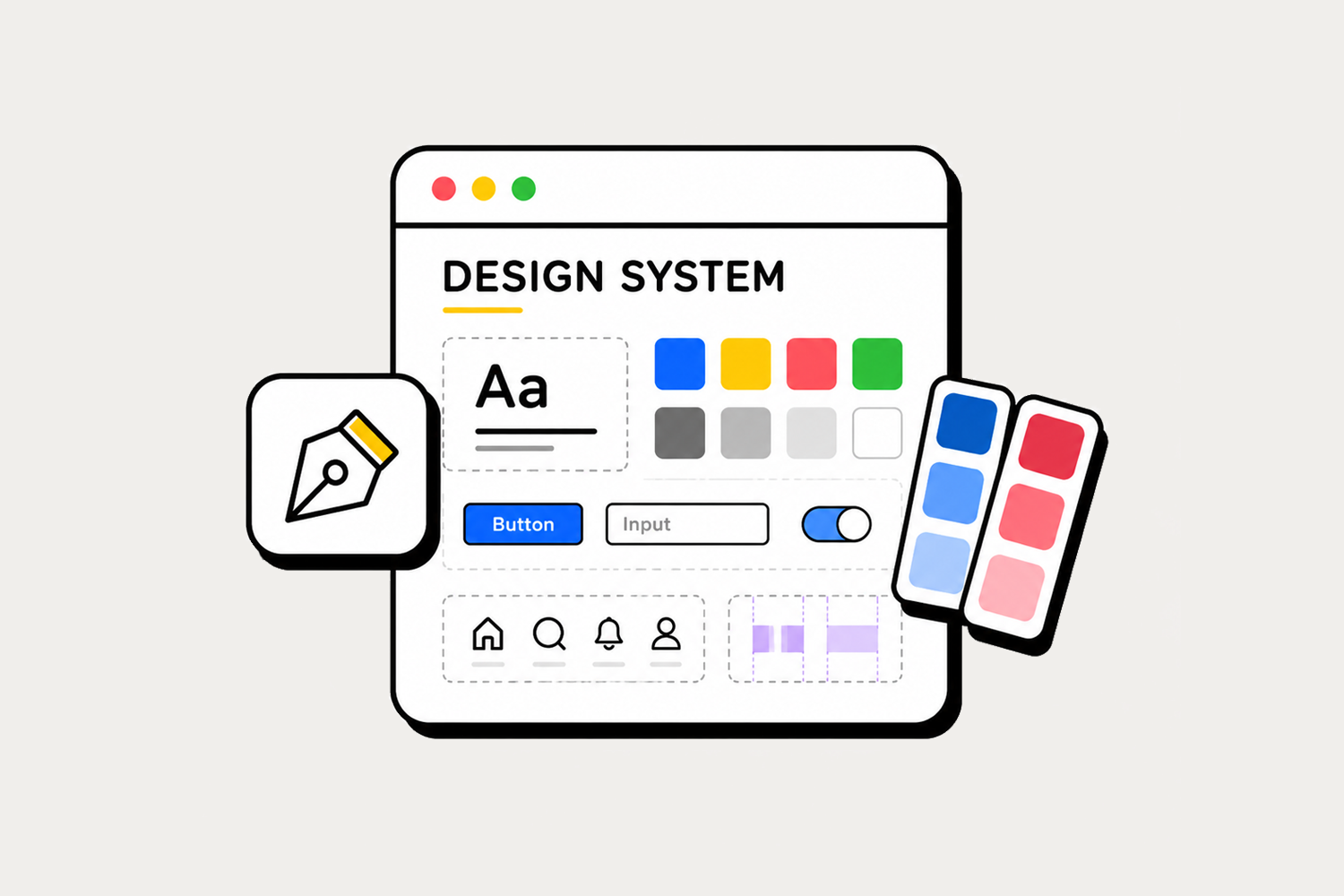
A Design System brings together reusable components, design tokens, design principles, accessibility standards, documentation, and implementation guidelines into one cohesive system that the entire team can rely on.
When it's working well, you hardly notice it's there. Everyone naturally follows the same patterns because they share the same language.
Why It Matters
Many people assume that the primary purpose of a Design System is to create visually consistent interfaces. While consistency is certainly important, I believe its greatest value lies in improving the way teams work together.
A Design System reduces repetitive decisions. Teams no longer need to rethink the same interface details every time they build a new feature. Instead, they can rely on shared standards and focus their energy on solving real user problems.
With a strong foundation in place, conversations shift away from button sizes, spacing, and color choices toward user needs, business goals, and delivering meaningful product experiences.
Ultimately, a Design System doesn't just create consistency across the interface—it creates consistency in how teams design, build, and collaborate.
Beyond a Figma Library
Building a Design System doesn't stop with a Figma file.
Figma is an excellent place to organize components and define design patterns, but a Design System truly comes to life when it's integrated into the product development process.
Components should exist in code, documentation should evolve alongside the product, and both Design and Engineering should contribute to its continuous improvement. That's what transforms a collection of assets into a living system.
What Makes a Good Design System?
A successful Design System allows teams to work naturally. Designers and developers shouldn't have to rethink interface patterns every time they build something new because the foundation is already in place.
Most mature Design Systems include clear design principles, typography and color tokens, spacing scales, reusable components, accessibility guidelines, and well-maintained documentation. More importantly, they're supported by shared ownership across Design, Engineering, and Product.
Like the products they support, Design Systems are never truly finished. They continue to evolve as teams learn, products grow, and user needs change.
My Experience
Throughout my experience working on different products, I've learned that consistency can't rely solely on design reviews. Reviews are valuable, but products evolve quickly. What's far more effective is having a system that makes the right decision the easiest one to make.
When everyone works with the same components, vocabulary, and design principles, collaboration becomes much smoother. Designers spend less time recreating patterns, developers reuse existing components, and product teams can focus on delivering value instead of revisiting the same decisions.
That's why I see Design Systems not simply as design assets, but as collaboration systems that help teams build products more efficiently and consistently over time.
Key Takeaways
- A Design System is a shared language, not just a collection of UI components.
- Its greatest value lies in reducing repetitive decisions and improving collaboration.
- Documentation and implementation are just as important as the components themselves.
- A Design System evolves continuously alongside the product and the team.
"People remember great products. Teams remember great systems."